The Wall That Changed the Room

Charcoal Wall Panels for TV Walls & Bedrooms in Delhi NCR | Premium Interior Wall Solutions by Imperial Decor
May 1, 2026
Monsoon-Proof Flooring for Delhi NCR Homes | SPC & WPC Decking Solutions by Imperial Decor
August 18, 2026
Charcoal vs. Fluted Wall Panels for Your Delhi NCR Home
A story-first guide to picking the feature wall your home actually deserves
There is a particular kind of silence that settles over a half-finished home. Furniture is in. Curtains are up. The
lighting works. And yet something is missing — one wall keeps staring back, flat and forgettable, refusing to
become the room you pictured on Pinterest six months ago.
Ask any interior consultant in Gurgaon, Noida, or South Delhi, and they’ll tell you the same thing: it’s almost
never the sofa or the chandelier that homeowners regret. It’s the wall they didn’t bother with — the one they
painted over instead of designing.
That’s the wall this guide is about.
Two materials keep coming up in nearly every serious conversation about feature walls in NCR right now:
Charcoal Wall Panels, dark, dense, and dramatic, and WPC Fluted Panels, warm, grooved, and endlessly
photogenic. They solve the same problem — a lifeless wall — but they solve it in opposite emotional registers.
One makes a room feel like a private screening lounge. The other makes it feel like a boutique hotel suite you
never want to check out of.
Let’s walk through both, honestly, room by room, mistake by mistake — the way a designer would talk to you
over chai, not the way a brochure would.

Why the Wall Behind Everything Matters More Than You Think
Think about the last hotel lobby, restaurant, or Instagram-famous café that made you stop and take a photo.
Chances are it wasn’t the furniture. It was the wall behind it — the backdrop that gave the whole room a mood.
Homes work the same way, just more intimately.
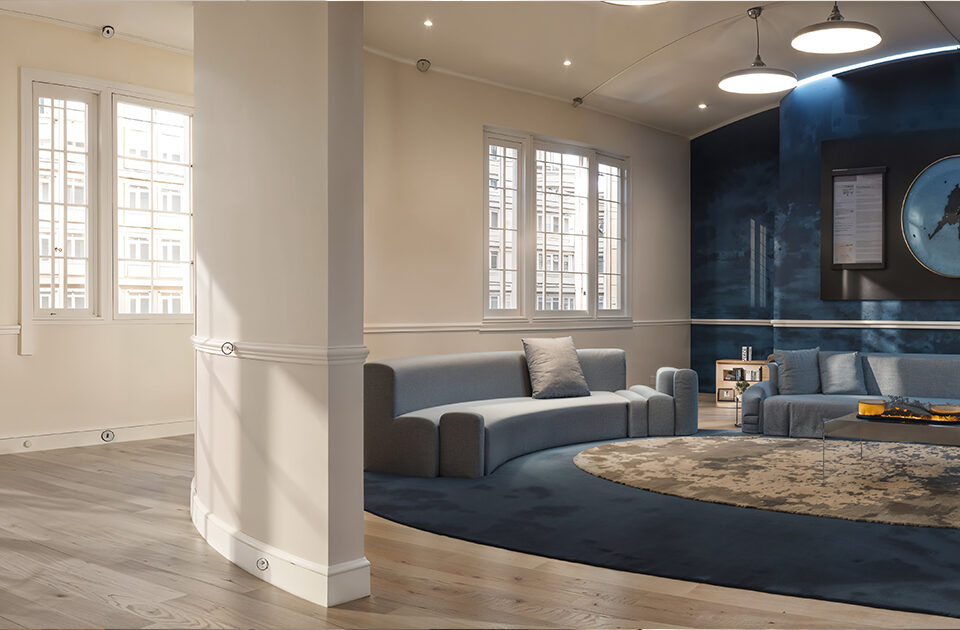
Picture this: it’s 9 p.m., the day is finally over, the television flickers on, and instead of a plain white wall
competing with the screen for attention, a deep matte charcoal panel swallows the glare completely. The TV
doesn’t just sit on the wall anymore — it floats, like it belongs in a private screening room. That’s not a decorating
trick. That’s what a properly chosen Charcoal Wall Panel does to a living room.
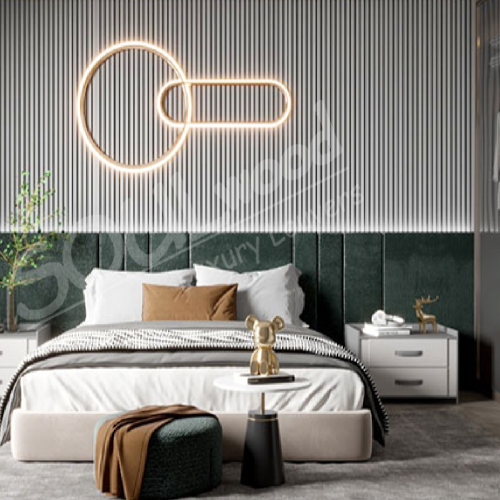
Now picture the opposite mood. It’s early morning, soft light is coming through sheer curtains, and it falls across a
headboard wall lined with warm, vertically grooved wood-toned panels. The light doesn’t just hit the wall — it
moves across it, catching each groove and casting a hundred tiny shadows that shift through the day. That’s what
WPC fluted panels do to a bedroom. They don’t just decorate a wall. They give it a pulse.
This is the real reason homeowners across Delhi NCR are moving past plain paint and POP: a good wall isn’t
decoration, it’s mood-setting infrastructure.
Charcoal Wall Panels: For the Room That Wants to Make a Statement
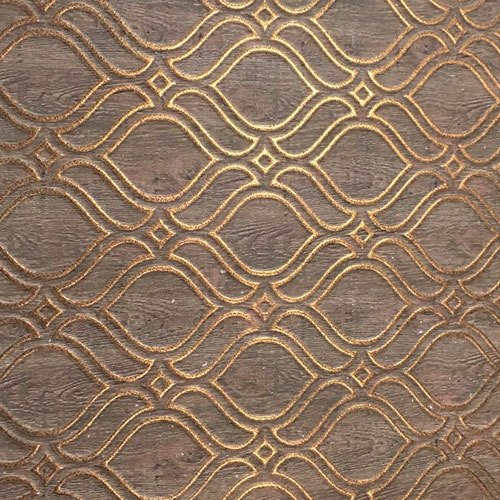
Charcoal panels are built from dense, high-grade PVC composite infused with rich charcoal tones, finished in a
velvety matte or subtly 3D-embossed texture. They don’t try to blend in — they’re meant to anchor a room.
Where they shine:
● TV and media walls. A dark backdrop makes cables disappear visually and lets the screen become the
hero of the room instead of competing with it.
● Large, sunlit spaces. Rooms with big windows or double-height ceilings can absorb the darkness
beautifully instead of feeling weighed down by it.
● Contemporary and industrial interiors — think exposed concrete, leather seating, brass or gold accents,
and moody ambient lighting.
Where to be careful: a small, north-facing bedroom or a windowless passage is not the place for charcoal. Dark
tones absorb light rather than bounce it, and in a cramped, dim room, that can tip a design from “moody” into
“closed-in.”

WPC Fluted Panels: For the Room That Wants to Feel Bigger and Warmer
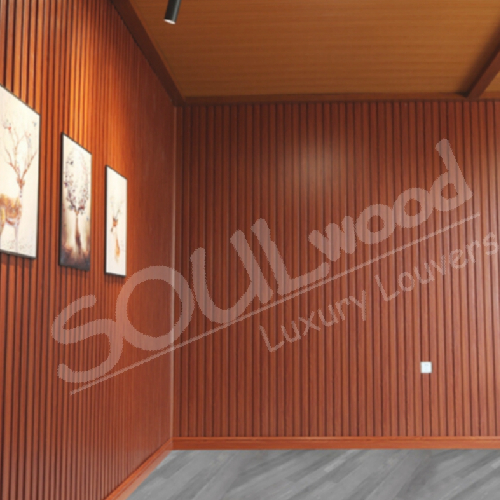
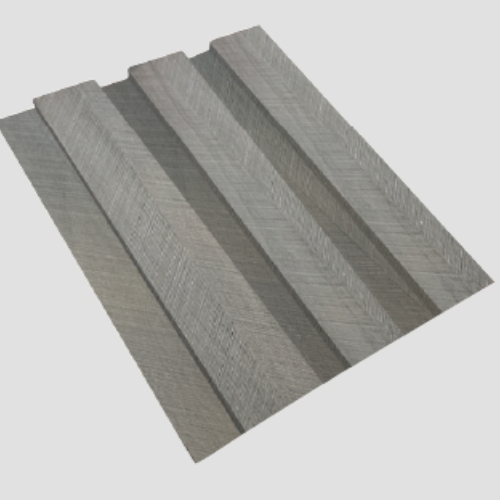
If charcoal panels are about drama, WPC (Wood-Plastic Composite) fluted panels are about rhythm. Continuous
vertical grooves run the height of the wall, catching light and shadow as the sun moves — the kind of texture that
photographs beautifully at every hour of the day.
Where they shine:
● Compact or low-ceiling rooms. The vertical lines are an old design trick that genuinely works — they pull
the eye upward and make ceilings feel taller than they are.
● Bedrooms and reading nooks, where soft wood tones or muted pastel flutes add warmth without ever
feeling heavy.
● Humid, monsoon-prone NCR homes. Because WPC is engineered to be fully waterproof and termiteresistant, it holds up in corridors, dining walls, and rooms near bathrooms far better than plywood or
MDF ever could.
Where to be careful: avoid installing fluted panels directly behind heavy cooking zones or open, dusty balconies.
Grease and micro-dust settle into the grooves over time, and while cleaning is easy, it does need to happen
regularly.
Charcoal vs. WPC Fluted — Side by Side
| Feature | Charcoal Wall Panels | WPC Fluted Panels |
| Visual mood | Dramatic, moody, ultra-modern | Warm, organic, rhythmic |
| How it handles light | Absorbs it — cuts glare | Refracts it — adds depth and movement |
| Best room size | Large, open-plan spaces | Compact to medium rooms |
| Maintenance | Wipe clean; dust shows easily | Occasional vacuuming of grooves |
| Moisture resistance | High | Excellent — 100% waterproof |
| Effect on ceiling height | Grounds the room, adds weight | Visually lifts a low ceiling |
So, Which One Is Actually Right for You?
There’s no universally “better” panel — only a better fit for your specific wall, light, and life.
Lean toward charcoal if: you’re building a dedicated TV or media wall, your room gets generous daylight, your
taste runs bold, industrial, or minimalist, and you like the idea of hidden gold-profile or RGB lighting adding
drama after dark.
Lean toward WPC fluted if: you’re designing a headboard wall for a bedroom, your ceilings are on the shorter
side, you’re drawn to Scandinavian or Japandi calm rather than drama, or your home sits somewhere in NCR that
deals with seepage, dampness, or older ground-floor plumbing.
And here’s a secret most showrooms won’t volunteer: you don’t have to choose just one. One of the most
requested layouts in Gurgaon living rooms right now pairs flat charcoal panels behind the television with warm
WPC fluted panels flanking either side, seams disguised with a thin strip of LED lighting. It gives you the
cinematic anchor and the warm framing, in the same wall.
Five Mistakes That Quietly Ruin a Beautiful Feature Wall
Buying the panel before finalising the furniture. Match your panel tone against your sofa fabric, wood
veneer, and flooring sample first — not the other way around.
● Ignoring how the room is actually lit. A panel that looks perfect under a showroom’s bright halogen lights
can look completely different under your home’s warm evening bulbs. Always test a sample at home, in
daylight and at night.
● Trusting the showroom finish blindly. Showrooms are lit at nearly triple the brightness of a real living
room. What glows there may look muted at home.
● Skipping wall prep. WPC is waterproof, but if there’s damp, crumbling brickwork underneath, covering it
up doesn’t fix the problem — it just hides it until it fails.
● Paneling every wall in sight. A feature wall works because it’s the exception, not the rule. Keep the other
three walls quiet — plain paint or subtle texture — so the feature wall has room to be the hero.
Frequently Asked Questions
Are WPC fluted panels really suited to Delhi NCR’s weather?
Yes. Between the punishing dry summers and the monsoon humidity, NCR is tough on ordinary materials. WPC
panels are specifically engineered to resist swelling, warping, and termite damage — a real upgrade over
traditional MDF or plywood paneling.
How do you clean charcoal wall panels?
Easily. Their anti-static finish resists dust build-up, and a soft microfiber cloth with a little water or mild soap
keeps them looking new. Skip harsh chemical cleaners.
Can charcoal and WPC fluted panels sit on the same wall?
Yes, and it’s one of the most popular combinations we install — flat charcoal behind the TV, fluted WPC on
either side, with hidden LED strips tracing the seams.
Which one looks more premium?
Both do, when installed well. Charcoal reads as sleek, modern luxury. Fluted WPC reads as artisan, custommilled warmth. The real difference-maker is precision — clean edge-joining, hidden wiring, and thoughtful
lighting.
Does Imperial Decor install across NCR?
Yes — end-to-end, from site measurement and sample visits to final installation, across Delhi, Gurgaon, Noida,
Greater Noida, and Faridabad.
The Wall Is Waiting
A feature wall isn’t the one th